Stucco Water Damage: Signs of Water Behind Your Stucco
Some water always gets past stucco. When it gets into the wall, the cause is traced to the flashing and the water-resistive barrier behind the stucco.
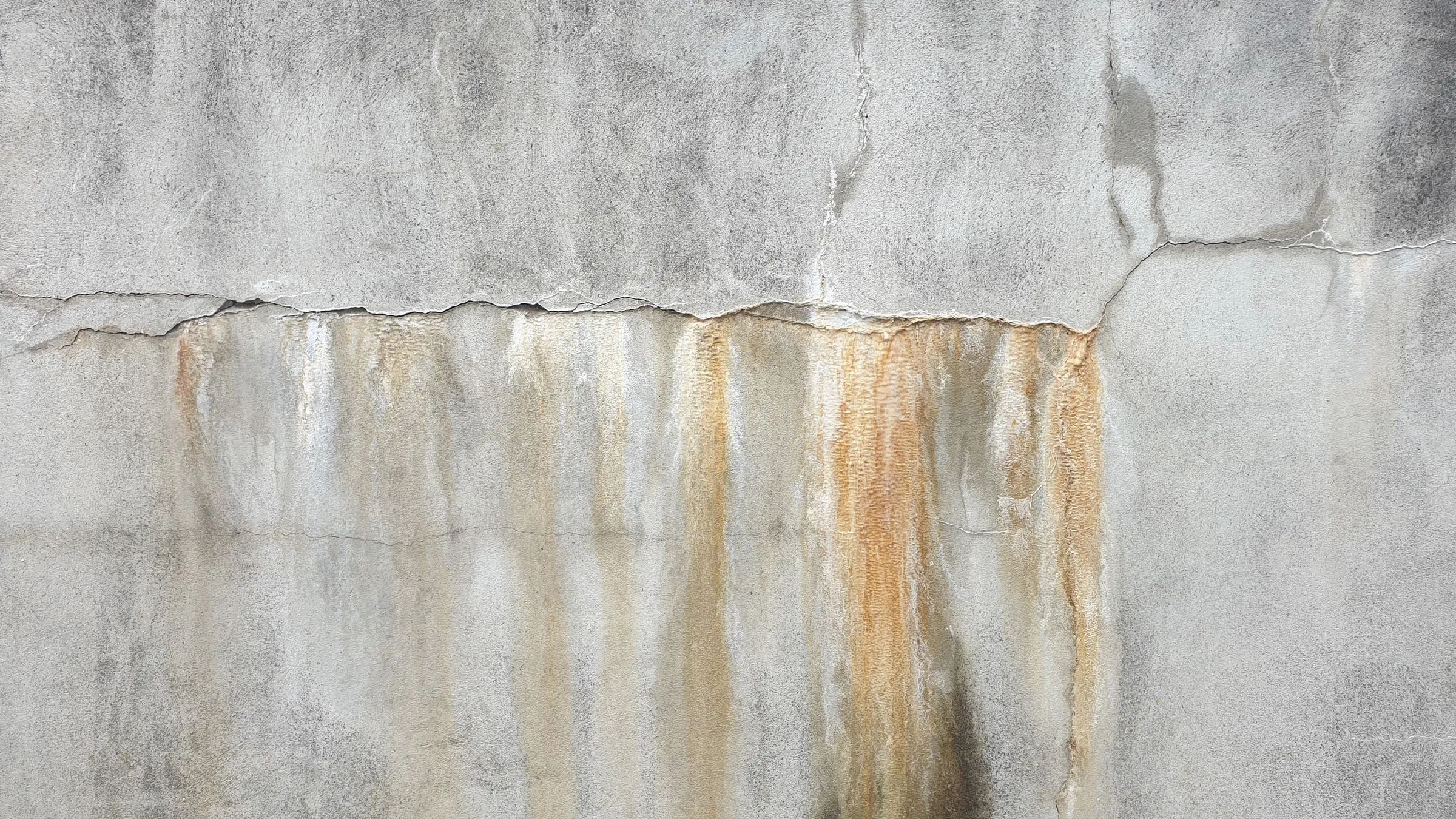
Symptoms
Signs of water behind stucco
- A bubbling or blistering finish.
- Water getting in where the stucco meets a window, door, vent or deck.
- Cracks wider than a hairline.
- Stucco run straight down onto a concrete slab or foundation, or a weep screed buried by soil or paving.
Last updated
Why is water seeping through my wall when it rains, but there is no leak?
Because stucco is not a sealed skin. The Northwest Wall & Ceiling Bureau (NWCB) starts its guidance on water-resistive barriers from this: “It is assumed that some incidental moisture will penetrate the outer most cladding of cement plaster (stucco) the same as brick, wood or other sidings.” In a sound wall, that water reaches the water-resistive barrier, runs down it and leaves at the weep screed at the bottom. Oregon’s code is written around the same idea: the wall must be built “in a manner such that water entering the assembly can drain to the exterior.”
Water gets into the building, or damages the framing, when that path fails. NWCB names the usual places: “penetrations through the stucco membrane such as windows, doors, vents, decks, etc. and cracks wider than what is termed ‘hairline’”. And when it investigates leaking buildings, the finding is consistent: “Investigations into leaking buildings are invariably the result of poor or inadequate flashings or a failure to properly lap flashings and/or WRB.” So a wall can let water in during rain with no single obvious hole: the gap is often in the flashing around an opening, or in how the layers behind the stucco were lapped.
Portland’s rain makes this a practical question; the Portland stucco repair page has the rainfall figures and the code that applies in the metro counties.
How water damage hides
The trade’s guidance is to evaluate the wall before a repair is scoped. What can show on the surface:
- A bubbling or blistering finish. Sika: “Blistering or bubbling of stucco finish is often caused by water that has gotten behind the finish.”
- Wider cracks. Cracks larger than 1/32 inch “could present issues with moisture intrusion and contribute to blistering and/or peeling of finishes” (Sika). See stucco cracks.
- Trouble at the base of the wall. Stucco carried down onto concrete, or a weep screed buried below grade, gives water nowhere to go.
EIFS houses and the barrier problem
EIFS is a separate case. Barrier EIFS, the first kind used in the United States, relies “on keeping the moisture completely out of the system”, with no drainage behind it. EIMA’s own account of the EIFS problem is that “The origin of the EIFS problem was due to poor construction practices such as leaking windows, improper flashing around the roof, the deck, and the chimney.” NWCB’s verdict: “Barrier EIFS cannot and probably should not have been used on wood framed structures with little or no protection from rain.” From November 1, 1999, the criteria for an ICBO (International Conference of Building Officials) evaluation report required a tested drainage EIFS on wood-frame residential buildings (NWCB 600-406). If your house has EIFS, see EIFS repair.
What happens next
The order matters: find out how far the water has gone, then decide the repair.
- Evaluation. A stucco inspection, which can mean opening a small part of the wall at a crack or around a window to see the substrate and the barrier.
- Repair or remediation. If the damage is local, a stucco repair may be enough. If water has reached the sheathing or framing, the wall is opened, the wet material repaired, and the barrier, drainage space and flashing rebuilt: that is stucco remediation.
- Flashing. Oregon requires kick-out flashing at every wall and roof intersection, and the barrier laps over the weep screed’s flange so water exits at the base.
Skip the coating as a fix. NWCB “does not believe elastomeric coatings should be used to solve water intrusion problems cause by inadequate flashings.”
Causes
How water gets behind stucco
Some water always gets past stucco, and the water-resistive barrier behind it is the backup. Leaks are usually traced to flashing, or to how the flashing and the barrier were lapped.
- Water at penetrations: incidental moisture finds its way past stucco "at penetrations through the stucco membrane such as windows, doors, vents, decks, etc. and cracks wider than what is termed 'hairline'" (NWCB).
- Flashing and barrier laps: "Investigations into leaking buildings are invariably the result of poor or inadequate flashings or a failure to properly lap flashings and/or WRB" (NWCB).
- Stucco taken down onto concrete: "Plastering directly down to the concrete surface can trap moisture and cause water to enter the building at the top of the foundation" (NWCB).
- A buried weep screed: Oregon code places it at least 4 inches above the earth or 2 inches above paving so trapped water can drain (2023 ORSC R703.7.2.1).
- A missing kick-out flashing where a lower roof meets a wall, which Oregon requires at all wall and roof intersections.
- On some EIFS houses, a barrier system with no way to drain: "Barrier EIFS rely on keeping the moisture completely out of the system" (NWCB).
Urgency
How soon to act
The Northwest Wall & Ceiling Bureau's advice is that "A comprehensive evaluation of the exterior plaster should be conducted by qualified persons prior to making any decisions for final scope of repairs." If you see a bubbling finish or water getting in at an opening, ask for an evaluation before choosing between a patch and remediation, and before painting or coating over the problem: elastomeric coatings are not a fix for flashing leaks.
The fix
What fixes it
Stucco Inspection
An evaluation of stucco or EIFS walls before a repair scope is set, including opening the wall at a crack where water is suspected.
Stucco Remediation
For water that has reached the wall behind the stucco: the cladding comes off, wet sheathing and framing are repaired, and the wall is re-clad over the barrier and drainage space Oregon code requires.
Stucco Repair
Repairs to cracks, holes and damaged corners in cement stucco, with patches matched to the existing texture and color as closely as the wall allows.
Get a Free Estimate
Tell us what you see on your stucco and we will follow up.
Questions, answered
Frequently asked questions
What does a bubbling stucco finish mean?
Often, water behind it. Sika's stucco repair procedure says: "Blistering or bubbling of stucco finish is often caused by water that has gotten behind the finish." It is a reason to have the wall evaluated before it is patched or painted.
Can water get behind stucco without a crack?
Yes. The Northwest Wall & Ceiling Bureau names penetrations through the stucco, such as windows, doors, vents and decks, as entry points alongside cracks wider than a hairline, and traces leaks to flashing and to how flashing and the water-resistive barrier were lapped.
Should the bottom of a stucco wall touch the ground?
No. The 2023 Oregon Residential Specialty Code places the weep screed at least 4 inches above the earth or 2 inches above paved areas, of a type that lets trapped water drain out, and NWCB warns that plastering directly down to concrete can trap moisture at the top of the foundation.
Get a Free Estimate
Tell us what you see on your stucco and we will follow up.